
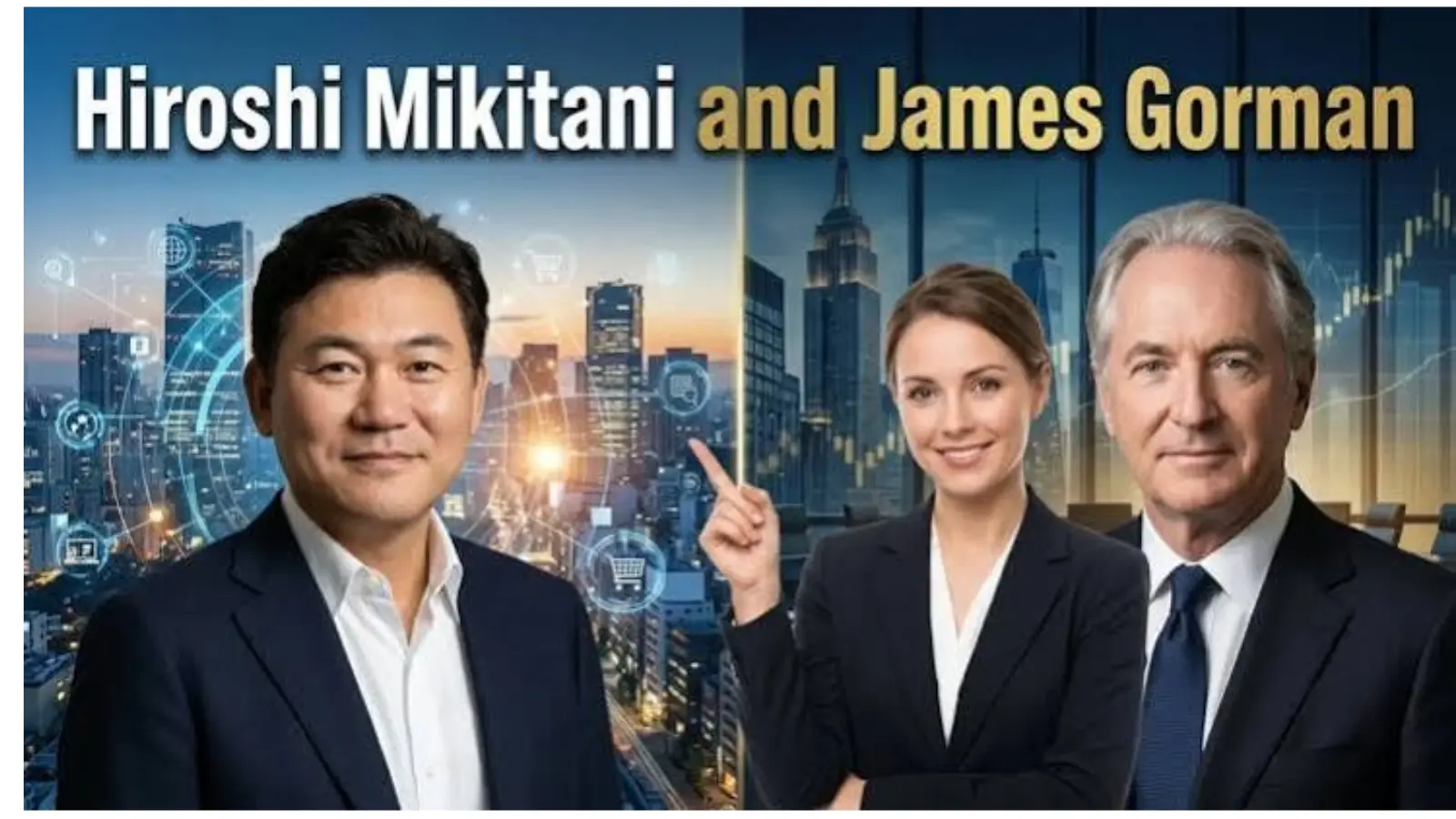
James Gorman and Hiroshi Mikitani are two prominent business executives associated with different areas of the global economy. James Gorman is known for his leadership at Morgan Stanley, one of the world’s major financial services companies, while Hiroshi Mikitani is the founder and chief executive of Rakuten Group, a Japanese technology and e-commerce business.
Although their professional careers developed in different industries, there is an interesting corporate connection between their organizations. Morgan Stanley has participated in financing-related transactions involving Rakuten, including a 2022 senior notes offering and Rakuten’s 2024 cash tender offers for outstanding debt securities.
This connection makes James Gorman and Hiroshi Mikitani an interesting subject for understanding international finance, corporate relationships, investment banking, and technology entrepreneurship. However, publicly available transaction announcements establish a relationship between the companies, not necessarily a direct personal partnership between the two executives.
Exploring their professional backgrounds, business achievements, and organizational connections provides a clearer picture of their influence on international business.
Who Is James Gorman? Understanding His Career and Background
James P. Gorman is an Australian-born American business executive best known for his leadership at Morgan Stanley. He joined the financial institution in February 2006 and became one of its most influential executives.
Before entering senior leadership at Morgan Stanley, Gorman developed experience in law, management consulting, and financial services. He began his professional career as an attorney in Melbourne, Australia, before becoming a senior partner at McKinsey & Company.
He later held several executive positions at Merrill Lynch, gaining experience in financial management, corporate strategy, and investment services.
Gorman’s educational background includes a bachelor’s degree and a law degree from the University of Melbourne, followed by an MBA from Columbia University.
His professional experience across different industries helped prepare him for the complex responsibilities of managing an international financial institution.
Gorman became Morgan Stanley’s co-president in 2007 and was appointed chief executive officer in January 2010. He later became chairman in 2012, holding both leadership positions until the end of 2023.
He became executive chairman in January 2024 and chairman emeritus in January 2025. He is also chairman of The Walt Disney Company.
His career is particularly significant because he led Morgan Stanley through a period of financial industry change, strategic restructuring, and business diversification.
How James Gorman Transformed Morgan Stanley
James Gorman’s leadership at Morgan Stanley is closely associated with the company’s strategic development following the global financial crisis.
When he became CEO in 2010, the financial services industry was facing significant challenges. Financial institutions were dealing with market uncertainty, regulatory changes, investor concerns, and pressure to strengthen their business models.
Gorman recognized the importance of developing a more balanced financial services organization.
One of his major priorities was strengthening wealth management. Instead of depending heavily on traditional investment banking activities, Morgan Stanley continued developing services that could generate revenue through long-term relationships with individuals, families, and institutional clients.
His strategic approach included several important areas:
- Wealth management expansion: Developing financial advisory and wealth management services became a major part of the company’s business strategy.
- Business diversification: Morgan Stanley strengthened its presence across investment banking, investment management, and wealth management.
- Risk management: Financial discipline and appropriate risk controls remained important priorities.
- Strategic acquisitions: The acquisitions of Smith Barney and E*TRADE contributed to the development of Morgan Stanley’s wealth management and digital brokerage businesses.
- Long-term client relationships: The company continued emphasizing financial advice, investment services, and broader client relationships.
These developments helped Morgan Stanley establish a more diversified business model.
Gorman’s career also demonstrates how leadership at a major financial institution involves balancing profitability, risk management, shareholder expectations, and regulatory responsibilities.
Who Is Hiroshi Mikitani? The Founder Behind Rakuten
Hiroshi Mikitani, also known as Mickey Mikitani, is a Japanese entrepreneur and the founder of Rakuten Group.
Born in Kobe, Japan, Mikitani studied at Hitotsubashi University before beginning his professional career at the Industrial Bank of Japan, now part of Mizuho Bank.
He later earned an MBA from Harvard Business School in 1993.
His experience in investment banking provided an understanding of financial markets and corporate operations. However, his long-term professional ambition led him toward entrepreneurship and the emerging internet economy.
In February 1997, Mikitani founded Rakuten, originally developing an online shopping marketplace that allowed independent merchants to establish digital stores.
The business was created at a time when internet shopping was still unfamiliar to many consumers and traditional businesses.
Mikitani recognized that digital platforms could help merchants reach customers beyond their physical locations.
Rather than operating only as a conventional online retailer, Rakuten developed a marketplace model that allowed participating businesses to manage their own stores and build customer relationships.
This merchant-focused approach became an important part of the company’s identity.
Today, Mikitani serves as Representative Director, Chairman, President and CEO of Rakuten Group, according to the company’s 2026 management information.
How Hiroshi Mikitani Built Rakuten Into a Global Technology Business
Rakuten’s development is one of the most important parts of Hiroshi Mikitani’s entrepreneurial career.
The company began with online shopping but gradually expanded into several related and complementary industries.
Its growth demonstrates how an internet business can develop into a broader digital ecosystem.
Some of Rakuten’s major business areas include:
E-commerce: Rakuten Ichiba provides an online marketplace where independent merchants can sell products to customers.
Fintech: Rakuten operates financial services involving banking, credit cards, payments, securities, and other financial products.
Telecommunications: Rakuten Mobile entered Japan’s mobile telecommunications market and became an important part of the company’s expansion strategy.
Digital content: The company operates services related to entertainment, digital media, and online content.
Technology infrastructure: Rakuten Symphony develops technology and infrastructure solutions connected with telecommunications and cloud-based networks.
Marketing and advertising: Rakuten uses its digital platforms to connect merchants, advertisers, and consumers.
This diversification has helped Rakuten develop relationships with customers across different aspects of their digital lives.
The company’s ecosystem strategy also allows its businesses to support one another. For example, consumers can interact with Rakuten’s shopping platform, payment services, financial products, and other digital offerings.
However, operating across multiple industries also creates challenges involving investment requirements, competition, technological development, and financial management.
Mikitani’s career therefore represents both the opportunities and complexities associated with building a diversified technology organization.
What Connects James Gorman and Hiroshi Mikitani?
One of the most relevant connections between James Gorman and Hiroshi Mikitani involves Morgan Stanley and Rakuten Group.
Morgan Stanley has participated in financing-related transactions involving Rakuten, providing a documented corporate link between the organizations.
Two examples help explain this connection.
The 2022 Rakuten senior notes offering
In December 2022, Rakuten Group completed a $500 million offering of 10.25% senior notes due in 2024.
Morgan Stanley & Co. LLC was among the financial institutions involved in the transaction as an initial purchaser, alongside Goldman Sachs, Daiwa, Mizuho, BofA Securities, and Citigroup.
This transaction demonstrates Morgan Stanley’s involvement in Rakuten’s international debt financing activities.
At the time, James Gorman was Morgan Stanley’s CEO and chairman.
The 2024 Rakuten cash tender offers
On January 25, 2024, Rakuten announced cash tender offers for certain US dollar-denominated senior notes scheduled to mature in 2024.
The company explained that the transaction was intended to help manage and extend its debt maturity profile.
Morgan Stanley & Co. LLC was named as one of the dealer managers, alongside Goldman Sachs, Daiwa Capital Markets, and Mizuho Securities.
The tender offers were connected with a financing transaction intended to provide funds for purchasing eligible outstanding notes.
At that time, Gorman was serving as Morgan Stanley’s executive chairman rather than its CEO.
These examples establish a business-level connection between the companies.
They do not, by themselves, demonstrate that Gorman and Mikitani personally negotiated the transactions, maintained a direct business partnership, or worked together in a formal executive arrangement.
Understanding this distinction is important when discussing their professional relationship.
Morgan Stanley’s Role in Rakuten’s International Financing
Morgan Stanley’s involvement in Rakuten’s debt transactions illustrates the role investment banks play in international corporate finance.
Large companies sometimes raise capital by issuing bonds or senior notes to investors. They may also use tender offers to repurchase outstanding debt before its scheduled maturity.
These activities can help businesses manage financing requirements, adjust debt maturity schedules, and maintain access to international capital markets.
Rakuten’s 2022 senior notes offering provided an example of its use of international debt markets.
The company’s 2024 tender offers demonstrated a further approach to managing existing financial obligations.
In the 2024 transaction, Rakuten announced a maximum aggregate purchase price of up to $1 billion for the relevant notes, subject to the terms of the offer. It also announced a related financing transaction.
Morgan Stanley’s participation as a dealer manager illustrates how investment banks can support companies in executing complex capital market transactions.
It is important to distinguish the different financial roles involved:
- Issuer: Rakuten Group was the company issuing the securities and conducting the tender offers.
- Investment bank: Morgan Stanley participated in the transaction as an appointed financial intermediary.
- Investors: Institutional and other eligible investors participated in the relevant securities transactions.
- Corporate leadership: Mikitani led Rakuten, while Gorman held senior leadership responsibilities at Morgan Stanley during the relevant periods.
This provides a more accurate explanation of the relationship than simply describing the two executives as business partners.
James Gorman and Hiroshi Mikitani: Comparing Their Business Approaches
James Gorman and Hiroshi Mikitani developed their careers through different professional paths.
Gorman is primarily associated with managing and transforming a major financial institution. Mikitani is known for creating a technology company and expanding it into multiple business sectors.
Their approaches can be compared across several areas.
| Business area | James Gorman | Hiroshi Mikitani |
|---|---|---|
| Main company | Morgan Stanley | Rakuten Group |
| Industry | Financial services | Technology and digital services |
| Professional background | Law, consulting, finance | Banking and entrepreneurship |
| Major achievement | Morgan Stanley transformation | Building Rakuten |
| Business focus | Wealth management and financial services | E-commerce, fintech and telecommunications |
| Leadership experience | Corporate executive | Founder and entrepreneur |
| International influence | Global financial markets | Digital commerce and technology |
Gorman’s experience highlights the importance of institutional management, financial diversification, and corporate governance.
Mikitani’s experience emphasizes entrepreneurship, digital innovation, and the development of new commercial opportunities.
Both careers demonstrate that business leadership requires an understanding of industry conditions and the ability to make decisions that support long-term organizational objectives.
Major Career Milestones of James Gorman and Hiroshi Mikitani
Looking at their professional timelines provides additional context for understanding their achievements.
James Gorman’s career milestones
- Early career: Began working as an attorney in Melbourne, Australia.
- Management consulting: Became a senior partner at McKinsey & Company.
- Financial services: Held executive positions at Merrill Lynch.
- 2006: Joined Morgan Stanley.
- 2007: Became co-president.
- 2010: Appointed CEO of Morgan Stanley.
- 2012: Became chairman of Morgan Stanley.
- 2023: Completed his tenure as CEO and chairman.
- 2024: Served as executive chairman.
- 2025: Became chairman emeritus of Morgan Stanley and chairman of Disney.
Hiroshi Mikitani’s career milestones
- 1988: Joined the Industrial Bank of Japan.
- 1993: Earned an MBA from Harvard Business School.
- 1997: Founded Rakuten.
- 2001: Became chairman and president of the company.
- 2004: Became CEO.
- 2010 onward: Continued supporting the development of Japan’s digital economy.
- 2014: Rakuten expanded its international technology presence through major business developments, including its acquisition of Viber.
- 2017: Rakuten acquired the naming rights to the Golden State Warriors’ home arena, then known as the Chase Center’s predecessor, the Warriors’ arena was renamed the Rakuten Arena?
Mikitani’s career also includes leadership involvement in sports, telecommunications, technology, and biotechnology-related businesses.
These timelines demonstrate two different forms of professional development: corporate executive advancement and entrepreneurial company building.
The Global Business Influence of Both Executives
The professional influence of Gorman and Mikitani extends beyond their respective companies.
Gorman’s career has been closely connected with international financial services, corporate governance, wealth management, and investment banking.
His leadership at Morgan Stanley helped shape the firm’s strategic direction during an important period in modern financial history.
His later appointment as chairman of The Walt Disney Company demonstrates his continued involvement in corporate leadership beyond the financial sector.
Mikitani’s influence is closely associated with Japan’s digital economy and the international development of e-commerce.
Through Rakuten, he helped create opportunities for smaller merchants to participate in online commerce.
His company’s expansion into fintech, telecommunications, and digital services also demonstrates how technology businesses can develop multiple interconnected revenue streams.
Their careers provide different examples of how international organizations can influence economic activity, business practices, and industry development.
What Business Leaders Can Learn From Their Professional Journeys
The experiences of James Gorman and Hiroshi Mikitani offer several practical lessons for business owners, entrepreneurs, and corporate executives.
Understand your market: Gorman’s financial experience and Mikitani’s early recognition of internet commerce show why market knowledge is important.
Develop a clear strategy: Businesses need a well-defined direction to make informed decisions and manage resources effectively.
Adapt to industry changes: Financial services and digital commerce continue evolving through technology, competition, and customer expectations.
Build valuable relationships: Long-term relationships with clients, merchants, investors, and business partners can support organizational growth.
Manage financial risks: Corporate expansion should be supported by careful financial planning and an understanding of potential obligations.
Invest in innovation: Companies need to improve their services, technology, and business operations to remain competitive.
Focus on execution: A strong business idea requires practical implementation, capable management, and consistent performance.
These lessons are useful because they come from two very different business environments.
Gorman’s career highlights the importance of managing an established financial institution, while Mikitani’s journey demonstrates how entrepreneurship can create new opportunities in emerging markets.
Frequently Asked Questions About James Gorman and Hiroshi Mikitani
1. Who are James Gorman and Hiroshi Mikitani?
James Gorman is an Australian-born American business executive and former CEO of Morgan Stanley. Hiroshi Mikitani is a Japanese entrepreneur and the founder and CEO of Rakuten Group.
2. What is the connection between James Gorman and Hiroshi Mikitani?
Their companies have a documented corporate connection through financing-related transactions. Morgan Stanley participated in Rakuten’s 2022 senior notes offering and its 2024 cash tender offers. These transactions do not establish a personal partnership between the two executives.
3. Is James Gorman the founder of Morgan Stanley?
No. Morgan Stanley was founded in 1935. James Gorman joined the company in 2006 and later became its CEO and chairman.
4. What company did Hiroshi Mikitani establish?
Hiroshi Mikitani founded Rakuten in Japan in February 1997. It began as an internet shopping marketplace and later expanded into financial services, telecommunications, and other technology businesses.
5. What was James Gorman’s role at Morgan Stanley?
Gorman served as CEO from January 2010 through December 2023 and chairman from January 2012 through December 2023. He became executive chairman in 2024 and chairman emeritus in January 2025.
6. What is Hiroshi Mikitani’s educational background?
Mikitani studied at Hitotsubashi University and earned an MBA from Harvard Business School in 1993.
7. Why did Rakuten use international debt markets?
Rakuten used international capital markets to raise funds and manage its financial obligations. Its 2024 tender offers were part of a strategy to manage and extend the maturity profile of outstanding debt.
8. What is the difference between Morgan Stanley and Rakuten?
Morgan Stanley is a global financial services company focused on investment banking, wealth management, and investment management. Rakuten is a Japanese technology group operating businesses in e-commerce, fintech, telecommunications, and digital services.
9. Is Hiroshi Mikitani still leading Rakuten?
Yes. Rakuten’s management information for April 2026 lists Hiroshi Mikitani as Representative Director, Chairman, President and CEO.
10. What is James Gorman doing after leaving Morgan Stanley’s CEO position?
Gorman became chairman emeritus of Morgan Stanley in January 2025 and serves as chairman of The Walt Disney Company.
Conclusion
James Gorman and Hiroshi Mikitani represent two different but important areas of international business leadership. Gorman’s career is closely associated with financial services, investment banking, wealth management, and the strategic transformation of Morgan Stanley. Mikitani’s achievements are connected with entrepreneurship, e-commerce, digital innovation, and the expansion of Rakuten into a global technology ecosystem.
Their companies also have a documented corporate connection through financing-related transactions, including Rakuten’s 2022 senior notes offering and 2024 tender offers involving Morgan Stanley.
This connection provides a meaningful business context for discussing both executives without assuming an undocumented personal partnership.
Ultimately, their professional journeys demonstrate how financial expertise, entrepreneurial vision, corporate strategy, and international business relationships contribute to the development of major organizations.

Alex Chuckles ek comedy writer hai jo funny one-liners, savage jokes, aur meme-style humor likhna pasand karta hai. Is ka content young audience ko hasa hasa kar pagal kar deta hai 😂